Thursday Night Lights: Why Short Midweek Races Sharpen Sailors Faster Than Sunday Series

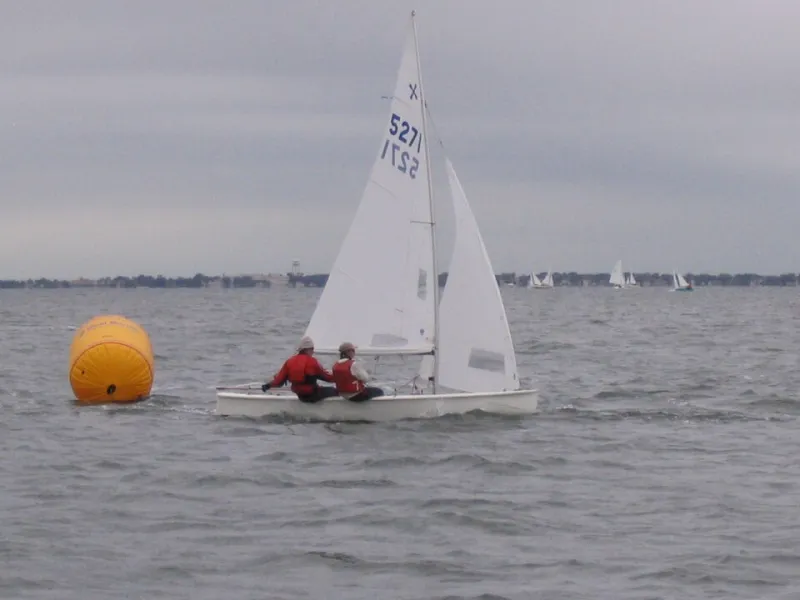
Photo: Thursday evening dinghy racing UK sailing club summer, via www.lovethispic.com
There is a particular kind of sailor who turns up on Sunday, waits two hours for the sea breeze, starts once, sails one long race and goes home convinced they have had a full weekend. They have had a nice day out. They have not had much practice.
Thursday-night dinghy racing is the opposite. You leave work, drive to the club, rig in 25 minutes, sail three or four short races, pack up in the dark and drink a pint with the race officer. It is not glamorous. It is also the fastest way we know to sharpen starts, boat handling and decision-making under pressure.
The case for the two-hour race
Short midweek races compress everything. The start sequence comes round again quickly. The first beat is short enough that a bad start is costly but not fatal. The run and the reach arrive before you have time to overthink them. You get more mark roundings in one evening than in a month of Sunday series. That repetition is the point.
At Andrew Simpson Sailing, we have watched sailors improve more in a single summer of Thursday nights than in several seasons of occasional weekend racing. The reason is not that midweek racing is more serious. It is that the consequences are small and the reps are high. You can try a port-tack start, mess it up, and try again 20 minutes later.
What Sunday racing hides
Sunday series racing teaches patience, endurance and how to manage a long race. Those are valuable. But it can hide the things that decide most UK club races: the first 30 seconds, the first tack, the first mark rounding and the ability to reset after a mistake.
A long Sunday race gives you one start and one chance to get the first beat right. A Thursday evening gives you three or four. Over a summer, that adds up. The sailor who has done 40 midweek starts is not necessarily faster in a straight line. They are usually calmer at the gun, better at holding a lane, and quicker to recover when the plan goes wrong.
Starts: reps, not theory
You can read about start-line bias all winter. It only becomes useful when you have to judge it with a stopwatch, a transit and a committee boat that is not quite where you expected. Midweek racing gives you that judgement in small doses.
We like to give each Thursday a focus. One week it is line bias and timing. The next it is the pin end. The next it is starting on port when the fleet is late. The races are short enough that a failed experiment does not ruin the evening. The debrief happens in the dinghy park, not in a bar-room lecture.
Boat handling under mild pressure
Short courses mean more tacks, more gybes and more mark roundings. They also mean more traffic. That is useful. A crowded leeward mark on a Thursday night teaches you to look up, communicate and commit. The pressure is real but the stakes are low, which is exactly the environment where habits form.
Light-wind evenings are just as valuable. They expose the sailors who can keep a boat moving and the ones who rely on breeze to hide their trim. A 45-minute drift around a short course is a masterclass in weight placement, sail shape and patience.
Fitting it around work
Midweek racing only works if it is genuinely easy. Keep a kit bag packed. Leave shoes, spray top and gloves in the car. Share lifts with a clubmate. Eat something before you leave work, not in the dinghy park. Tell the race officer you will be there so they can plan a start.
You do not need a perfect preparation. You need to get on the water. A 20-minute rig and a 10-minute change is enough if the boat is ready and the kit is where you left it. The sailors who make midweek racing work are not the ones with the most free time. They are the ones who removed the small frictions.
Using it as weekend training
Midweek racing is not a separate sport. It is a training ground for the weekend. Pick one thing to work on each Thursday and carry it into the next open meeting. If you are working on starts, do not chase the overall result. If you are working on light-wind trim, accept that the breeze might not cooperate.
The best use of a Thursday night is to treat it as a lab. Change one variable. See what happens. Debrief on the way home. Then apply it on Sunday.
Building club participation
Midweek racing dies when it becomes a clique. The clubs that keep it alive make it easy for newcomers: short courses, a friendly briefing, a novice-friendly start and a social afterwards. They also make sure the race officer has help. A Thursday night does not run itself.
If your club has a midweek series that is fading, the fix is usually not more competition. It is less friction. Publish the start time clearly. Keep the entry simple. Pair experienced sailors with newer ones. Make the first race short enough that nobody is still sailing at dusk. And make sure the results go up before people leave.
The Sunday series will always have its place. But if you want to get better quickly, with less waiting and more time actually racing, Thursday night is hard to beat.