Thirty Minutes That Decide the Race: A Pre-Start Recon Habit for UK Estuaries
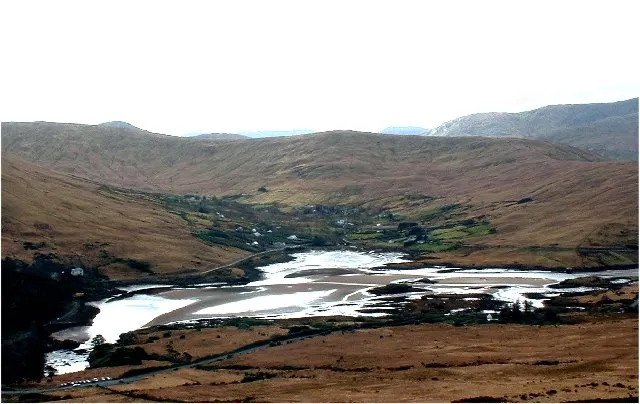
Photo: Robert Bone, CC BY-SA 2.0, via Wikimedia Commons
Every estuary venue has a version of the same conversation. Two crews are rigging in the dinghy park, one says the tide will be pushing them over the line by the time the sequence starts, the other says it will not turn for another forty minutes. One of them is right, and it is almost never the one who read the tide table on Thursday and assumed it would behave.
Estuaries are not difficult because the tides are big. They are difficult because the water changes direction, depth and temper on a scale measured in hundreds of metres and tens of minutes. That combination is exactly what makes a half-hour window worth hunting for — and exactly why a generic race plan tends to fall apart by the first windward mark.
Why the window exists at all
In open water, a tidal stream builds and fades over hours. In an estuary, the shape of the land does the work: channels narrow, sandbanks steal depth, and headlands throw back eddies that run against the main flow for a while after the tide has turned elsewhere. Add a sea breeze trying to fill in over the top of it, and you get a short stretch of time where the current, the chop and the shift all line up in your favour.
That stretch is usually short. Not a whole leg, necessarily — sometimes just a mark rounding, sometimes just the first beat. But those are the moments where a race is quietly won, and they reward observation over theory.
A recon routine you can run from the slipway
We started doing this properly during the 2026 season, and it takes about half an hour. It is deliberately low-tech.
- Walk the water's edge. Ten minutes, no phone. Look at what is happening around mooring buoys, chain, weed and the leeward side of pontoons. A buoy leaning downstream tells you more than any app.
- Check two fixed transits. Find a pair of landmarks you can line up from the race area and note whether the gap between them is opening or closing with the stream. This gives you a rough rate of change, not just a direction.
- Look at the sky over the land. On an estuary, the sea breeze often announces itself as a line of cumulus inland before it fills on the water. If that line is building, the window is probably going to be later than the tide table suggests.
- Sail the first beat before the first beat. Ten minutes upwind, out of the way, watching your compass and the water colour. Where the water goes flat and dark, the stream is running with the wind; where it stands up in short chop, it is running against.
- Write it down before the gun. Not afterwards. Memory is generous and dishonest.
Annotating the tide table properly
The mistake most of us make is treating a tide table as a schedule. It is better used as a skeleton, with your own notes hung on it.
We now keep four columns alongside the printed times: high and low water, the observed turn in the race area, the wind direction at the time, and one word for how the water looked. After a few events you start to see patterns that no published table will give you — that the stream in a particular corner runs an extra twenty minutes past the turn, or that a north-westerly flattens the chop on the western side and leaves a nasty line down the middle.
The other thing worth marking is where the wind shifts tend to come from. Estuaries are full of shoreline effects: a beach that bends the breeze, a row of trees that creates a soft patch, a channel that funnels a gust line down its axis. Those are local facts. They do not travel, they are not in the sailing instructions, and they are worth more than any general theory of shifts.
Where the gains turned up in 2026
Three examples, all from estuary racing last season.
At a spring event in a shallow harbour, the fleet that went left off the line found pressure but ran out of water; the boats that held to the deep channel on the right gave away twenty metres in the first two minutes and took it back twice over at the leeward mark, where the stream was still running out hard while the leaders arrived in slack water. Nobody had a clever plan for that. One crew had simply walked the wall at low water and knew where the deep line was.
On a summer afternoon at an estuary club, the tide turned during the first race and the wind went with it. Boats that had set their rigs for the morning's breeze were overpowered for ten minutes — long enough to lose the beat. The crews who had noticed the sea breeze cloud line over the land had already flattened everything and were happy.
And in a light-air evening series, the most consistent gains came from the last hundred metres to the windward mark, where the current eased over a shallow bank. Two boats found it, both of them because they had sailed there before the start rather than minutes before the gun.
When the window does not open
Some days there is no window. The tide runs the same all afternoon, the breeze is steady, and the fleet finishes in the order it started. Those are the days to bank information rather than chase miracles — to note that the right side of the course was favoured for no obvious reason and then go and find one.
And it is worth saying plainly: reading an estuary well is not a substitute for boathandling. If your tacks are slow, no amount of tide-table annotation will save you. The window is an advantage, not a magic trick.
The habit
The habit, in the end, is thirty unhurried minutes before the briefing. Look at the water. Find your transits. Watch the sky. Sail the beat you are about to race. Write down what you saw while it is still true.
It is not glamorous work and nobody will ask you about it at the bar. But over a season, the crews who do it are the ones who seem to be in the right place at the right time — and the rest of us keep calling it luck.