The Workshop Notebook: Twelve Rigging Checks We Ran After the 2026 Season
At the end of the 2026 season our dinghy came out of the water looking tired but sound. That is exactly the moment when it is easiest to put the cover on, walk away and promise to look at the rigging in March. We did the opposite. Over two weekends in the workshop we ran a twelve-point winter rigging audit, photographed every station, and wrote down what we found. It was not glamorous. It was, without much doubt, the most useful thing we did for next spring.
Why the post-season window matters
A UK winter is hard on boats. Frost, damp, a dinghy park that never quite dries, and trailers that sit loaded for months all do quiet damage. A spring panic is expensive: parts are scarce, the first open meeting is close, and every small fault gets rushed. A post-season audit keeps the evidence fresh. You remember the odd creak from the last race, the halyard that felt rough under load, the shackle that was always a little stiff. Photograph it now, order the parts in November, and fit them properly in January.
The twelve checks we used
We worked bow to stern, then masthead to trailer. The order matters less than doing every station twice: once with the rig up and once with it down.
- Mast step and deck ring. Look for crazing, elongation and corrosion around fasteners. Ours was dry, but the deck ring needed re-bedding.
- Cap shrouds and lower shrouds. Check the wire for meat hooks, broken strands and rust bleed at the terminals.
- Swage fittings. This is the one that stops seasons. Clean them, inspect with a magnifier and look for hairline cracks, oval wear and discolouration.
- Shackles and pins. Replace anything with an elongated hole, a bent pin or threads that feel rough. Stainless is not immortal.
- Halyards and rope tails. Run every rope through your hand under light tension. Chafe hides near blocks and cleats.
- Masthead sheaves. Spin them. A flat spot or a wobble is a warning, especially on a main halyard that takes load all day.
- Forestay and tension. Check the wire, the turnbuckle and the rig tension at the gauge. A seized turnbuckle is a spring problem waiting to happen.
- Spreaders and tips. Look for movement, cracked boots and chafed cap shrouds. The tips should not saw at the wire.
- Boom fittings and kicker. Check rivets, tangs and the gooseneck. Light-air creaks often start here.
- Control lines and trapeze gear. Elastic, cleats, blocks and end fittings all age quietly.
- Trailer-induced wear. This is the one UK sailors underestimate. Rollers, supports, hull pads and mast cradles can create point loads that show up as cracks or soft spots.
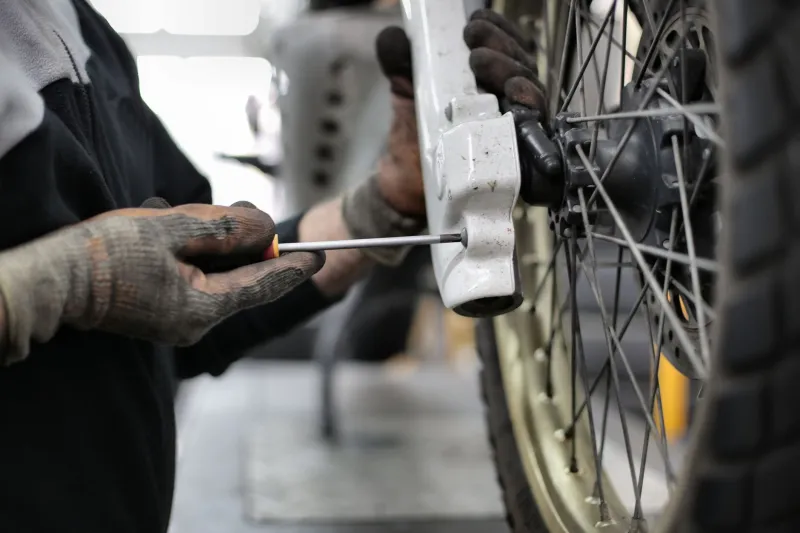
- Fasteners and rivets. Go round with a screwdriver and a torch. If a fitting moves, find out why before it becomes a bigger repair.
What we actually found
The audit was not a disaster report, but it was not a clean bill of health either. We found a hairline crack in one swage fitting, two shackles with elongated holes, and a main halyard with chafe just above the cleat. The masthead sheave had a flat spot that we had mistaken for friction in the halyard. The forestay turnbuckle was stiff enough to make tension checks unreliable. One trailer roller had worn a polished patch on the hull, and a boom rivet was loose.
We replaced the swage, both shackles, the main halyard, the sheave and the turnbuckle. We re-bedded the deck ring, changed the trailer roller and re-riveted the boom fitting. None of it was dramatic. All of it was cheaper than a failure at the first spring event.
Reassembly and the spring handover
We labelled every part and kept the photographs in a shared folder. When the rig goes back up, we will check forestay tension, recheck shackles under load and run the halyards again. The audit is not finished until the boat has done a short sail and everything has been rechecked. That is the difference between a winter tidy-up and a proper rigging audit.
The twelve-point list is deliberately simple. You can do it in a garage, a club workshop or a dinghy park on a dry day. The point is not to find fault for its own sake. It is to know the boat before the season asks questions.