Held Ashore: Making the Postponement Hour Count
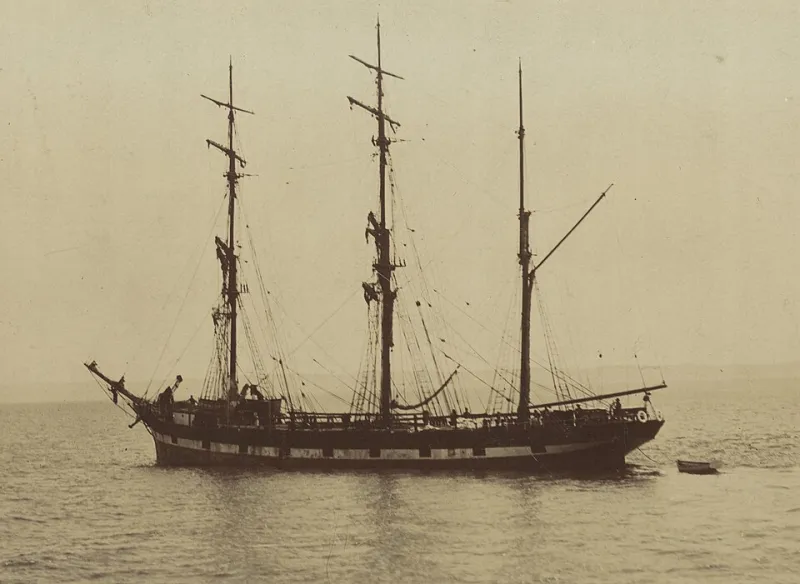
Photo: National Library NZ on The Commons, No restrictions, via Wikimedia Commons
There is a particular sound that ripples across a dinghy park when the postponement goes up: a collective exhale, then the slow drift towards the tea urn. Someone says the word 'gusty' with great authority. Someone else checks their phone, announces a number, and everybody nods as though the number settles the matter.
Then forty minutes disappear and the first beat is a mess.
AP ashore is not a cancellation and it is not a punishment. The race officer is usually looking at the same thing you are — a mean wind sitting a few knots above the limit, a glassy patch that will not fill, fog rolling up the reservoir, or a windward mark drifting gently towards the far bank. The decision to hold is a gift of time. Most of us spend it badly.
Here is a routine that gives the hour back.
The drift starts earlier than you think
Within about five minutes of the flag going up, the crew has scattered. One is queueing for a bacon roll, one is in the car with the heater on, one has found a friend from another club and is deep in a conversation about foils. By the time you want to talk about the first beat, you are briefing an empty patch of grass.
So make the plan before the plan is needed. On the way to the event, agree who calls the regrouping. It should be whoever is least likely to be distracted — and it should not be a discussion. 'If we get held, back at the boat in ten.' That is the entire system.
Re-brief standing up, in ten minutes
A postponement brief is not a repeat of the morning briefing. Nobody wants to hear the whole strategy again, and nobody will remember it if you do.
Pick three things and no more:
- the first beat plan, in one sentence, including which side you are committing to first
- who does what at the start — line bias caller, timekeeper, the person watching the pin
- the abort rule. What has to happen for you to change your mind at the five-minute gun.
Stand up. Keep it under ten minutes. Ask each person to say their job back to you in their own words. That last part feels slightly awkward and works better than anything else you will do all morning.
Read the trend, not the number
A single gust reading off a phone app is close to useless. What matters is the shape of the last two or three hours.
Look at the club anemometer if there is one, then look at what the water is actually doing: the texture, the dark patches, whether the gusts are rolling through in a rhythm or arriving at random. On an inland reservoir, note whether the wind is bending around the clubhouse or the treeline. On an estuary, the tide state changes everything about how a gust behaves over the start line.
Then check the tide or the water level, and note the time of the turn. Write it down. A postponement that runs through the turn will produce a completely different first beat from the one in the morning briefing, and the crews who noticed will be the ones holding a lane twenty minutes later.
One change, made properly
This is where postponements are usually wasted. Someone decides the rig felt wrong in the last race and starts pulling everything — rig tension, kicker, jib lead, rake — and then cannot remember what was there before.
Choose the single change that addresses your biggest known weakness. If the boat was underpowered upwind in the last race, that is probably rig tension or jib lead. If you were getting hammered in the gusts, it is probably kicker and cunningham settings for the top end. If the boat felt sticky off the line, check the foils and the rudder downhaul before you touch the rig at all.
Then do it the same way you would on a training day: measure it, mark it, and write the number and the reason in the notebook. One change, recorded, is information. Five changes, unrecorded, is guesswork wearing a hi-vis jacket.
Warmth is a performance item
Cold crew are slow crew. Hands that cannot feel a sheet will not trim well, and a brain that is busy being cold is not busy reading the water.
Get out of wet kit. Put on a dry base layer and a hat. If the postponement looks long, get into the car with the heater on for ten minutes rather than standing about being stoic. Being cold is not a virtue and it is definitely not fast.
Fuel, but not a carvery
The temptation is a large hot meal. Resist it. A heavy lunch at 11:40 and a first race at 13:00 is a reliable recipe for a slow, sleepy first beat.
Eat little and often instead — a sandwich, a banana, something salty — and drink properly. If it is genuinely cold, a flask of soup is worth its weight in the boat. Keep a bottle of water in the boat bag rather than in the car, because you will not walk back for it.
The ten-minute switch
The hardest part of a postponement is the transition: the moment the AP comes down, the warning signal is imminent, and everyone is still in a coat.
Watch the flagpole, not your phone. When the postponement looks like it is coming down, you want to be changed, kitted, and standing by the boat with the trolley already turned. From that point, you have one job: get on the water and get to the start area with time to spare. A crew arriving at the line with ninety seconds to go has already lost the beat.
The hour is not lost. It is just waiting to be used properly.