Five Motions, One Summer: Turning the Club AGM Into a Racing Upgrade
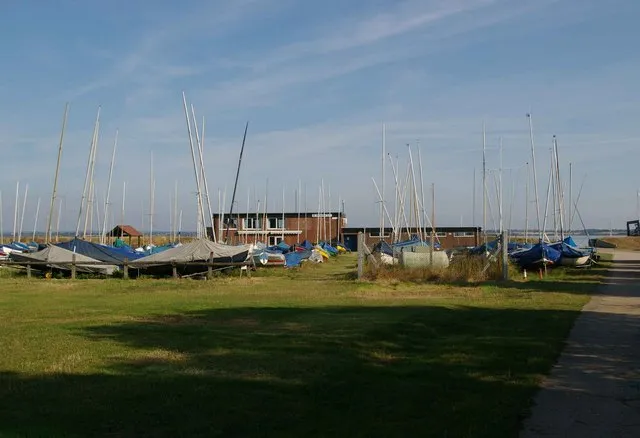
Photo: Glyn Baker, CC BY-SA 2.0, via Wikimedia Commons
The notice lands in your inbox some time in late October, usually with a PDF agenda attached and a hopeful line about car park charges. The club AGM. Forty members in the clubhouse on a wet Tuesday, twelve apologies, a tea urn doing the heavy lifting, and a stack of motions carried 14–3 without anyone quite remembering what was agreed.
And yet the AGM is where next summer's racing is actually decided. Not on the water, not in the protest room — in a room with a flip chart and a slightly slow projector. The trouble is that most sailing motions fail for the dullest possible reason: they were drafted badly and sprung on the room. A little craft turns a routine meeting into a genuine performance upgrade.
Here are five I would happily put my name to this winter.
Motion one: start times that mean something
Most dinghy racing already has a published start time. The problem is that we treat it as an aspiration rather than a commitment — a bit like a 10am briefing that begins at 10.15 because someone is still rigging.
A motion worth tabling: that from the opening race of the 2027 season, published start times are fixed, and any delay beyond ten minutes must be signalled with an AP, announced on the PA or club channel, and noted in the race officer's report with a reason.
It sounds bureaucratic. It is not. Fixed starts change behaviour upstream — rigging earlier, launching earlier, the race team on station earlier — and they make the club's racing look and feel more professional to visitors and newcomers. It also stops the quiet drift where the first race starts later each week until the whole afternoon is compressing the last race into a fading breeze.
Cost: nothing. Support base: everyone who has ever missed a start because the committee boat was still coming alongside.
Motion two: safety cover defined in numbers
Safety cover is the one area where vagueness is genuinely dangerous. Phrases like adequate cover and usual arrangements belong nowhere near a sailing instruction.
Propose a written minimum: a stated ratio of safety boats to competing craft, a minimum of two people in each powered craft, an agreed protocol for when wind or temperature crosses a threshold, and a named race officer empowered to abandon without a committee discussion.
Then attach a line to the budget — small, honestly costed — for refresher training and equipment checks on the safety fleet. Two hundred pounds for a powerboat refresher and a set of new kill cords is not a controversial spend. Framing it as racing infrastructure rather than a general expense is what carries the room.
Motion three: results published within 24 hours
There is no good argument left for a results sheet on the notice board on Thursday when the race finished on Sunday.
A motion to publish handicap and fleet results — times, corrected times, penalties, and any redress decisions — online within 24 hours, with the physical sheet remaining for those who prefer it. One named volunteer owns the process, and a backup is agreed in the same breath.
Why this is a racing motion and not an admin one: a helm who can see that they lost 40 seconds on the second beat learns something; a helm who sees a number in a spreadsheet on Thursday evening has already forgotten which shift cost them. Series standings that update promptly also kill most of the mid-series grumbling about who is leading what.
Motion four: fund the people who run the racing
We ask a lot of the race team and then pay for precisely none of it. A motion to ring-fence a training line in the racing budget — race officer courses, mark-laying sessions, a first aid refresher — plus a simple two-shadows rule: every duty is shadowed by someone who has not done it before.
The shadowing element costs nothing and does more for continuity than any course. It also quietly answers the question every club asks in February: who on earth is running the committee boat in June?
Motion five: let a racing sub-committee actually decide
Nothing drains goodwill faster than needing a special general meeting to approve a change of course area. Delegate it. A racing or sailing sub-committee, meeting twice between AGMs, with authority to make operational decisions up to a modest stated figure, minutes published to members, and a standing report at the next AGM.
Set the limit carefully, keep the minutes dull and detailed, and the room will vote for it. Members rarely object to being asked less often about things they never wanted to decide.
Win it in the boat park, not the meeting
Motions fail in November because they were first spoken about in November. Do the work in October.
- Talk to the people who will vote. Two or three boat-park conversations will tell you whether the wording lands before it reaches an agenda pack.
- Find a seconder early, ideally someone from a different fleet.
- Cost it in one line. Unsigned numbers scare committees.
- Write the motion on a single page: what changes, what it costs, who does it, when it starts.
- Ask for it to be in the papers circulated in advance, not raised from the floor.
- Go in ready to accept a friendly amendment. A weakened motion that passes beats a perfect one that dies 11–14.
The morning after
A carried motion is not a result — it is a draft. Get the minute agreed, translate the wording into the notice of race and sailing instructions before the spring, and put a review date in the calendar for March.
Racing clubs rarely improve in leaps. They improve in small administrative steps that nobody notices until the first gun goes and, remarkably, it goes on time.