Puff Shadows and Tree Lines: A Reservoir Wind-Reading Toolkit for Coastal Racers
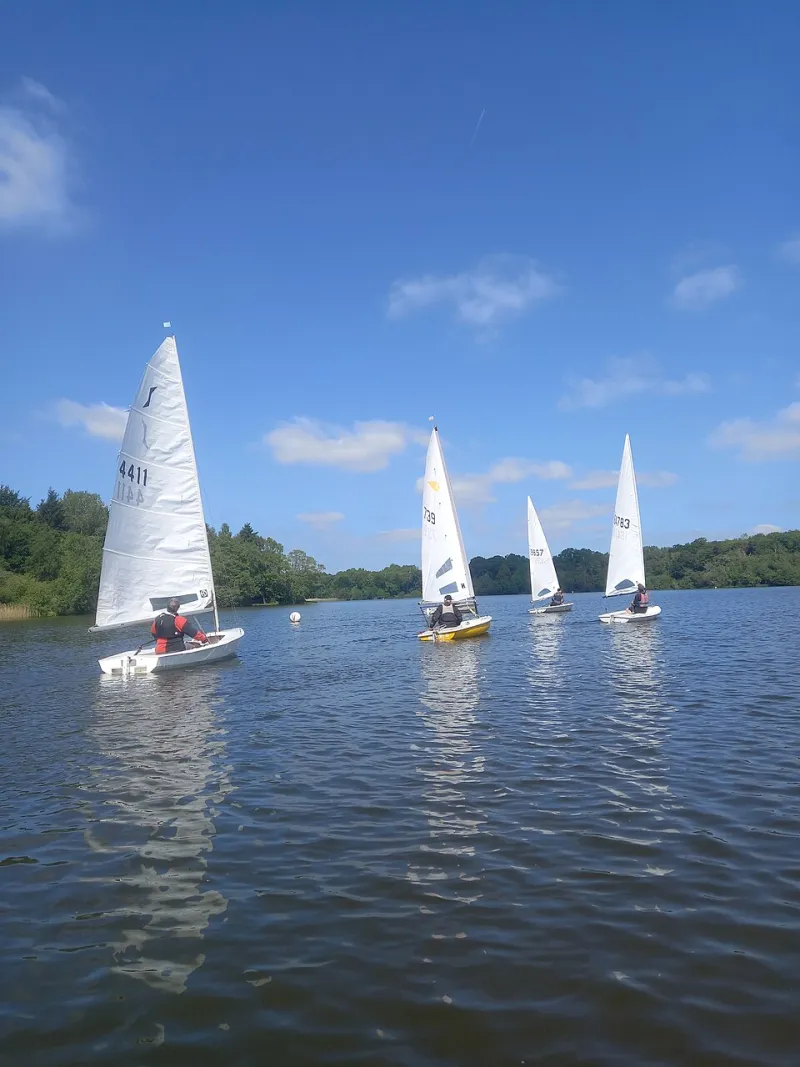
Photo: Bugsybanana, CC BY-SA 4.0, via Wikimedia Commons
Coastal sailors like to tease inland racing. The wind bends around the clubhouse, the shifts arrive in clusters and the whole lake seems to change its mind every two minutes. Fair enough. But that is exactly why a reservoir is such a useful place to train. The clues are close, the cycles repeat and you get far more feedback per hour than you do on open water.
At Andrew Simpson Sailing we are interested in habits that survive the trip from the dinghy park to the coast. Reservoir racing gives you three of the best: seeing puff shadows, sailing to the next pressure and reading the shoreline as a wind map. None of them are reservoir-only tricks. They just become easier to learn when the whole race course is the size of a postcode.
Habit one: learn to see the puff shadow
On a reservoir, pressure is often visible. Darker patches slide across the water, ripple lines sharpen, and the lulls behind trees or buildings leave a softer, glassier footprint. Coastal sailors tend to look straight through this because swell, chop and bigger geography clutter the picture. Inland, you cannot ignore it.
The habit is not just spotting the dark patch. It is tracking what happens around it. A puff has an edge, a direction and a shadow of lighter air behind it. If you only sail towards the dark water, you will sometimes arrive after the pressure has moved on. If you watch the edge and the lull together, you start to see the wind as a moving band rather than a series of lucky breaks.
Drill: On your next reservoir training day, take a compass bearing on every clear puff you can see for ten minutes. Note where it hits, which way it travels and what the water looks like immediately behind it. Then do the same on a coastal training day, but allow for swell and tide. The bearing habit is the same; the visual clutter is different.
Habit two: sail to the next pressure, not the last shift
Inland racing can make you shift-hungry. A header arrives, you tack, and for a moment you feel clever. Then the next band fills from a different angle and the gain evaporates. The reservoir lesson is to look forward. Instead of asking where the wind is now, ask where the next pressure will be when you reach the mark.
That might mean holding a slightly lower lane to meet a filling band, or giving up a small header because the longer pressure line is more valuable. It is not about being passive. It is about sequencing. Coastal racing rewards the same thinking, especially on a shifty day when the forecast says one thing and the sea breeze says another.
Drill: Before the start, pick three pressure bands across the course and predict which one will reach the windward mark first. Write the call down. After the race, compare your prediction with what actually happened. Do this for a few weekends and you will stop chasing the last shift and start sailing towards the next one.
Habit three: use shoreline features as a wind map
Reservoir sailors become amateur geographers. Tree lines, gaps in the woods, buildings, dam walls and hill shapes all leave a signature. A gap can funnel pressure. A tall hedge can leave a soft hole. A bend in the shore can bend the breeze. None of this is unique to inland water. Coastal clubs have cliffs, harbour walls, breakwaters and beach profiles that do exactly the same job at a larger scale.
The trick is to build the map before the gun. A quick shoreline scan from the slipway is worth more than a vague feeling on the first beat. Look for the features that will interrupt or accelerate the wind, then check whether the water agrees. If the tree line says left and the ripples say right, you have learned something before the start.
Drill: Sail a shoreline lap in training and note three features that change the wind. Then choose one leg of the race course and predict where the pressure will be strongest. On a coastal day, repeat the exercise with the clubhouse, sea wall and headland instead of trees and hedges.
A simple pre-race checklist
- Wind direction now, and the forecast trend for the next two hours.
- Three visible pressure bands: where they are, where they are going.
- Shoreline features that might bend, block or funnel the breeze.
- The first mark: which side of the beat gets the next pressure, not the last shift.
- One bail-out plan if the wind goes soft or the tide turns the game.
Keep the reservoir habit at sea
The point is not to turn every coastal race into an inland puzzle. It is to keep the useful bits. Puff shadows make you look ahead. Pressure sequencing stops you over-reacting. Shoreline reading gives you a local map before the start. Those habits are cheap, repeatable and they work on a gravel pit, a Welsh lake or a windy Solent beat.
Reservoir racing may not have the glamour of a coastal championship, but it gives you something better: repetition. Use it. The sailor who can read a shifting inland breeze is usually the one who spots the coastal band before the fleet does.